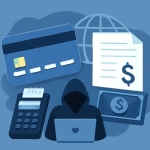
The Hidden Economy of Digital Fraud: What You Need to Know About the Best Carding Websites
What Are Carding Websites and How Do They Operate?
In the shadowed corners of the internet, a parallel economy thrives on stolen financial data. The term carding websites refers to underground platforms where cybercriminals buy, sell, and trade compromised credit card information, fullz (complete identity packages), and related digital goods. These sites have evolved from simple IRC chat rooms and rudimentary forums into sophisticated, dark-web marketplaces that often mimic the user experience of legitimate e-commerce platforms. Understanding their mechanics is not about condoning illegal activity; it is about recognizing a persistent threat vector that costs global economies billions annually.
Most of these platforms operate on the dark web, accessible only through anonymizing software like Tor. They use cryptocurrencies—primarily Monero and Bitcoin—to obscure financial trails. A typical carding marketplace will feature listings that include the card number, expiration date, CVV, cardholder name, billing address, and sometimes even the associated IP address or mother’s maiden name. The quality and accuracy of this data determine pricing. A “fresh” credit card with a high balance and a verified billing address sold in bulk can cost anywhere from a few dollars to over a hundred dollars per record. Sellers are often rated by buyers, creating a grim parody of eBay’s feedback system to maintain reputation among thieves.
Behind the scenes, these sites rely on multi-layered infrastructure. They use bulletproof hosting providers that ignore takedown requests, rotate domain names rapidly to evade law enforcement, and employ technical safeguards such as DDoS protection to fend off rival hackers. The administrators, often anonymous figures known only by pseudonyms, provide escrow services to prevent exit scams between individual vendors and buyers. The platforms make money by taking a percentage of every transaction, just like any legal marketplace. Some of the more established networks even offer automated checker tools that allow buyers to verify whether a stolen card number is still valid before making a purchase, reducing immediate write-offs and increasing the “value” of the listings.
The Anatomy of a Perfect Trap: Risks Lurking Behind Best Carding Websites
For anyone casually searching the term best carding websites out of curiosity or misguided intent, the biggest irony is that the vast majority of the links found on the surface web are not gateways to criminal riches but carefully baited traps. Law enforcement agencies, cybersecurity researchers, and rival fraudsters constantly seed the internet with fake carding platforms. These honeypot sites are designed to harvest credentials, plant malware, or simply record the IP addresses and login data of anyone foolish enough to engage. The reality is that a genuine, high-functioning darknet carding shop does not advertise itself on publicly indexed search engines.
Financial loss on these platforms takes many forms. Even if a user finds a working marketplace, the risk of an exit scam is astronomical. Exit scams occur when the site administrators, having accumulated a large sum of cryptocurrency in escrow wallets, suddenly shut down the website and disappear with all user funds. This is not a rare event; it is the standard lifecycle of most carding forums. A market that survives for a year is considered ancient. Users frequently deposit funds to purchase specific data dumps only to find that the vendor provided dead cards, residential proxies that don’t work, or personally identifiable information (PII) that is already flagged on every anti-fraud detection service.
Beyond the immediate financial pitfalls, the legal and personal danger is overwhelming. Engaging with carding websites is not just a violation of a service’s terms of service; it is wire fraud, identity theft, and computer intrusion. Federal agencies like the FBI, Secret Service, and Europol have dedicated task forces that run these sites after seizing them, logging the activities of every visitor for months before moving in for arrests. A user thinking they are browsing an anonymous black market might actually be scrolling through a government-controlled server, with every keystroke recorded as evidence. Furthermore, many of these criminal hubs are infested with malware-laced “checkers” and “generators” that ransomware a user’s own computer, holding their legitimate personal files hostage. The search for quick cash invariably leads to becoming the primary victim.
Why the Term “Best Carding Websites” Is a Search Query Built on Myth
When analyzing global search trends, the keyword combination best carding websites suggests a user base looking for shortcuts to wealth. However, the concept of a “best” carding website is an oxymoron within the cybersecurity landscape. The fraud ecosystem is inherently predatory; there is no customer service department to complain to if the stolen data is defective. A realistic view of these networks shows that operational security failures and backstabbing are the only consistencies. The administrators who run these platforms are themselves criminals who frequently sell their own user databases to other criminals or blackmail their top buyers with the threat of exposing their identities.
The transactions are natively hostile. A buyer sending cryptocurrency to an address controlled by a hidden service has zero legal recourse. This vacuum of trust has spawned a sub-industry of verified vendors who sell “valid rate” guarantees, often claiming a 70–90% success rate in physical and online carding. These guarantees are universally fraudulent. Even if a small test batch works, the bulk purchase will almost always consist of recycled, already-canceled, or region-locked cards that trigger instantaneous anti-fraud alerts at the point of sale. Banks and payment processors have developed machine learning algorithms that analyze transaction velocity, geographic anomalies, and merchant category codes in real time. A card bought on a “best” list is burned faster than it takes to copy and paste the numbers.
For academic researchers, cybersecurity students, and threat intelligence analysts, there is legitimate value in monitoring these hidden spaces to understand attack vectors and data breach origins. Yet even for these professionals, the term “best” is a misnomer; the focus is always on the most dangerous and the most persistent threats. Understanding the landscape requires recognizing that these sites are not static stores. They are churning masses of stolen botnet logs, credential-stuffing outputs, and POS (point-of-sale) malware captures. A resource that attempts to catalog the current state of active, seized, or abandoned marketplaces can offer a stark, data-driven reality check against the glamorized myths often sold in social media comment sections. To get a raw, unfiltered snapshot of this volatile underground without risking a felony charge, one might examine a curated threat intelligence compilation that monitors these domains, such as what you might find referenced as a hub for the best carding websites—a landing page that reveals the sheer turnover and toxicity of these illicit addresses rather than offering any unrealistic promise of success.